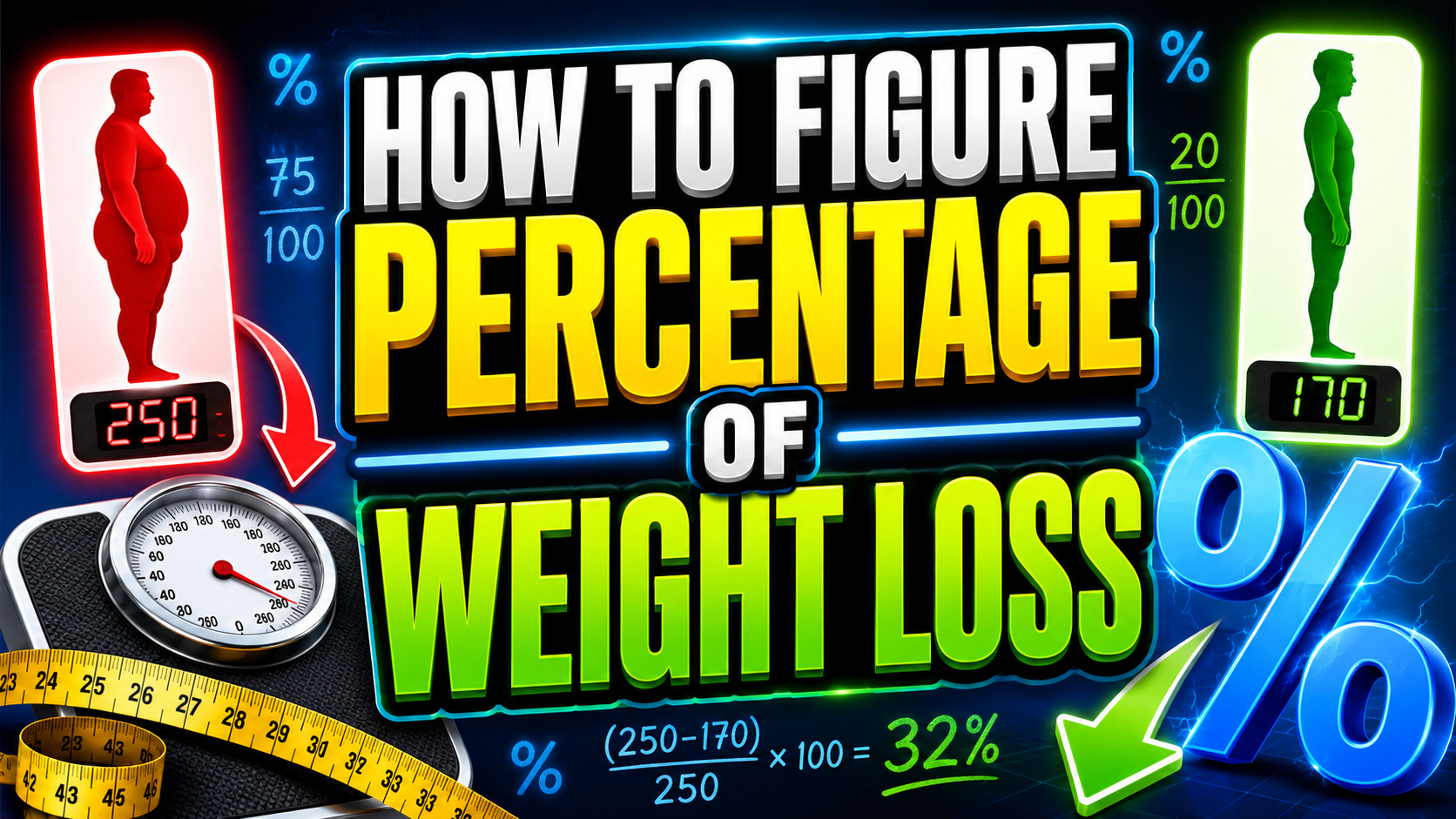
How to figure percentage of weight loss starts with one simple idea: compare the weight you lost with the weight you started from. This gives you a fairer progress number than pounds alone, because ten pounds means something different for a 150-pound person than it does for a 250-pound person.
When you know the percentage, you can set smarter goals, avoid panic over normal scale changes, and track progress with more confidence. Keep reading for more useful information.
Why Weight Loss Percentage Gives You A Fairer Number
Weight loss percentage adjusts your progress to your starting body weight. If you lose 12 pounds from 240 pounds, you lost 5%, but if you lose 12 pounds from 150 pounds, you lost 8%. That context matters because percentage lets you compare your own progress over time without copying another person’s body, diet, or timeline.
Many people track pounds only, then feel behind when another person loses more total weight. A calculator website that lets you access 300+ free online calculators can help you handle related numbers in one place, including BMI, calorie, date, and unit calculations. That type of tool is useful when you want quick answers without building every formula from scratch.
Expert quote: “A percentage turns scale change into context because it compares you with your own starting point, not someone else’s journey.”
How To Figure Percentage Of Weight Loss With The Basic Formula
How to figure percentage of weight loss becomes easy when you use the same formula every time. Subtract your current weight from your starting weight, divide that answer by your starting weight, then multiply by 100. The formula is: weight lost ÷ starting weight × 100.
If your starting weight was 200 pounds and your current weight is 185 pounds, you lost 15 pounds. Divide 15 by 200, then multiply by 100, and your result is 7.5% weight loss. This result means you lost 7.5% of the body weight you had at the start.
Simple Example
A 7.5% result does not mean you lost 7.5% body fat, because the scale cannot separate fat, water, muscle, and food weight. That is why your percentage is helpful, but it should not be your only progress measurement. Add waist size, strength, energy, and consistency to get a better view.
Use The Same Weighing Method Every Time
Your percentage is only as accurate as the numbers you enter. Weigh yourself at the same time of day, preferably in the morning after using the bathroom and before eating. Wear similar clothing each time, because shoes, belts, and heavy layers can shift the result.
Scale weight moves because of sodium, hydration, digestion, stress, sleep, menstrual cycle changes, and hard workouts. A clean measurement process pairs well with a free conversion calculator when you need to convert pounds to kilograms or kilograms to pounds before entering your numbers. Accurate conversion helps you avoid a false percentage caused by mixed units.
Expert quote: “The best progress metric is the one you can repeat under the same conditions without changing the rules each week.”
Calculate Weight Loss Percentage In Pounds Or Kilograms
You can use pounds if you live in the United States, and you can use kilograms if your scale or medical chart uses metric units. The percentage answer stays the same when both numbers use the same unit. Losing 10 pounds from 200 pounds equals 5%, and losing 4.54 kilograms from 90.72 kilograms also equals about 5%.
The formula does not change because percentage compares part to whole. A free scientific calculator can help when your numbers include decimals, repeated checks, or reverse formulas. That is useful when you want a clean answer instead of rounding too early.
If you weigh 220 pounds and want to lose 10%, multiply 220 by 0.10 to get 22 pounds. Your target weight would be 198 pounds. This reverse calculation helps you plan clear, realistic milestones.
What Your Percentage Result Actually Means
Your result tells you how much total body weight changed from your starting point. A 3% loss may look small, but it can still show a real start if you built better eating, walking, sleep, and strength habits. A 5% result often becomes a practical milestone because it shows measurable progress without extreme restriction.
Health organizations often use 5% to 10% as a realistic first target over several months. NIDDK says experts recommend an initial goal of 5% to 10% of starting weight within six months, which gives many adults a practical first benchmark. That means a 200-pound person may start with a 10- to 20-pound goal instead of chasing a dramatic number.
Your percentage is not a diagnosis. It does not measure cholesterol, blood pressure, blood sugar, strength, waist size, or mental health. Use it as one progress tool, not as the judge of your worth.
Healthy Weight Loss Speed Matters
Fast weight loss can feel exciting, but it is not always better. A common practical range is about 0.5% to 1% of body weight per week for many adults who lose weight through food changes and activity. For a 220-pound person, that equals about 1.1 to 2.2 pounds per week.
This pace gives your body more room to keep muscle, protect energy, and build habits you can maintain. Faster loss may happen at the beginning because water weight often changes quickly, especially when you reduce salty foods or refined carbs. After that, progress usually slows, and that is normal.
The CDC reported in 2026 that 47.2% of U.S. adults met federal aerobic activity guidelines in 2024. Men reached 52.3%, while women reached 42.4%, and adults ages 18 to 34 reached 54.0% compared with 38.4% among adults 65 and older. These numbers matter because activity supports weight management, heart health, strength, and long-term maintenance.
Do Not Confuse Weight Loss With Fat Loss
Weight loss and fat loss are related, but they are not the same. Your scale measures total mass, which includes fat, muscle, water, bone, food, and waste. That means your weight loss percentage can improve even when some of the change comes from water or lean tissue.
A smarter plan protects muscle while reducing excess fat. Strength training, enough protein, steady walking, good sleep, and a moderate calorie deficit all support that goal. If you lose weight but feel weaker every week, your plan may need adjustment.
Expert quote: “Fast loss is not always better loss, because preserving muscle and daily function matters more than chasing the lowest scale number.”
Common Mistakes That Give Wrong Results
The biggest mistake is using the wrong starting weight. Use the weight from the day you truly started your plan, not your highest weight from years ago unless that is the tracking point you choose. If you change the start number often, your percentage loses meaning.
Another mistake is entering current weight after a high-sodium meal, travel day, or hard workout and treating that number as final. The CDC’s September 2024 data brief reported adult obesity prevalence at 40.3% during August 2021 to August 2023, and severe obesity at 9.7%. Those public-health numbers show why personal tracking should be clear, realistic, and private to your body.
Use Percentage To Set Better Goals
Percentage goals help you avoid vague targets. Instead of saying, “I need to lose weight,” you can say, “I want to lose 5% of my starting weight in a realistic time.” That gives you a number, a timeline, and a calmer way to evaluate progress.
If you start at 180 pounds, a 5% goal equals 9 pounds. If you start at 260 pounds, a 5% goal equals 13 pounds. Both goals are valid because they reflect each person’s starting point.
Use milestones in stages. Start with 3%, then 5%, then 7.5%, and then 10% if your health team agrees. This keeps the process manageable and helps you celebrate progress before reaching your final target.
What Current U.S. Weight Trends Show
Current U.S. data explains why percentage-based tracking matters. CDC adult obesity maps released in 2025 showed that in 2024 every U.S. state and territory had adult obesity prevalence of at least 25%. The Midwest was reported at 35.9%, the South at 34.5%, the West at 30.2%, and the Northeast at 30.3%.
Those numbers do not tell you what your body should weigh, but they show that weight management is a common health issue, not a personal failure. Many people need practical tools, realistic goals, and less shame. A simple percentage calculation gives you one clear number without turning your plan into guesswork.
Newer obesity treatment trends also changed the conversation. In 2024, NIDDK noted that many researchers see a new era where some people can achieve 15% or more weight loss without surgery, while older medications often produced about 5% to 10%. Even then, your own percentage remains the starting point for understanding progress.
When A Plateau Changes The Math
A plateau happens when your weight stops changing for a few weeks even though you are still trying. This can happen because your body now needs fewer calories at a lower weight, your activity dropped without you noticing, or water retention is masking fat loss. It does not always mean your plan failed.
When the scale stalls, do not rewrite the formula. Keep calculating from your original starting weight, then review your habits with honesty. Look at sleep, snacks, portion sizes, alcohol, steps, strength training, and weekend eating.
Expert quote: “A plateau is data, not failure, because it tells you where to review your routine before making a major change.”
Conclusion
How to figure percentage of weight loss is simple: subtract your current weight from your starting weight, divide by your starting weight, and multiply by 100. That number helps you understand progress in a fairer way than pounds alone, especially when your starting point differs from someone else’s.
Use the same weighing method, keep units consistent, and treat the percentage as one piece of your health picture. A 5% to 10% loss can be a useful first milestone, but your plan should also protect strength, energy, sleep, and long-term habits. The best result is not only a lower number. It is a clearer routine you can keep.
FAQ
What Is The Formula For Weight Loss Percentage?
The formula is weight lost divided by starting weight, then multiplied by 100.
How Often Should I Calculate My Weight Loss Percentage?
Calculate it once a week or once every two weeks, because daily changes can be noisy.
Is 5% Weight Loss Good?
Yes, 5% weight loss is a useful first milestone for many adults.
Does Weight Loss Percentage Measure Fat Loss?
No, it measures total weight loss only, not fat loss alone.
Can I Use Kilograms Instead Of Pounds?
Yes, kilograms work perfectly if both your starting and current weights use kilograms.
What Is A Healthy Weekly Weight Loss Percentage?
Many adults aim for about 0.5% to 1% of body weight per week.
Why Did My Percentage Stop Changing?
Your body may be holding water, adapting to a lower weight, or receiving more calories than you realize.
Should I Use My Highest Weight Or Starting Weight?
Use the weight from the day you started your current plan.
Is Losing 10% Of Body Weight A Lot?
Yes, 10% is a meaningful change for most people, so plan it in stages.
What Else Should I Track Besides Weight Percentage?
Track waist size, strength, energy, sleep, steps, clothing fit, and habit consistency.