Structured Fraction Entry
Use clear numerator and denominator values instead of guessing how a stacked fraction should be interpreted. This helps avoid common mistakes with signs, mixed numbers, and improper fractions.
Add, subtract, multiply, and divide fractions, mixed numbers, and whole numbers with simplified fraction, mixed-number, and decimal results.
Enter fractions and calculate to see your result.
Fraction arithmetic becomes easier when numerators, denominators, signs, and simplification steps stay visible from start to finish.
Use clear numerator and denominator values instead of guessing how a stacked fraction should be interpreted. This helps avoid common mistakes with signs, mixed numbers, and improper fractions.
Addition, subtraction, multiplication, and division each follow different fraction rules. A good calculator keeps the method aligned with the operation being solved.
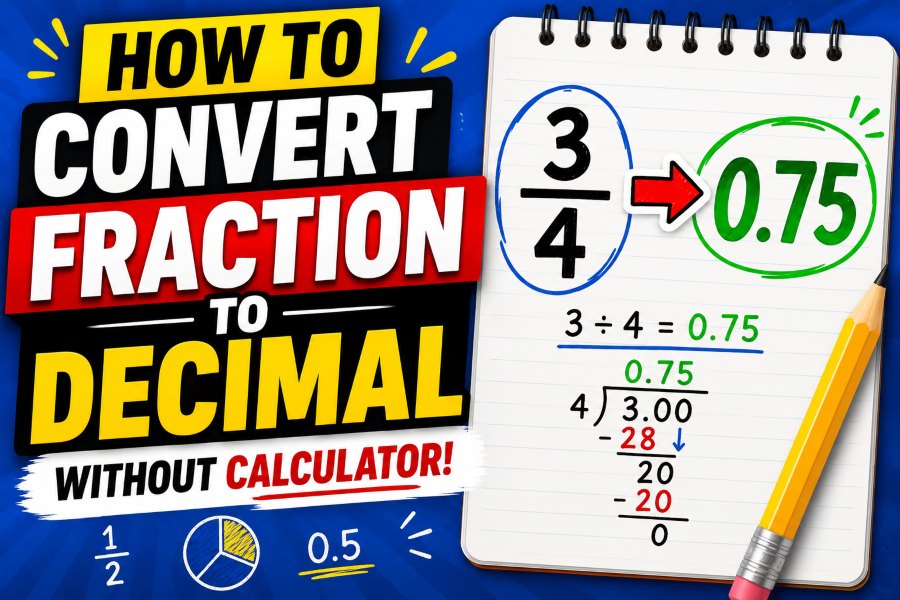
Fraction answers often need to be compared with decimals or percentages. Seeing the relationship makes classroom checks, recipes, measurements, and ratios easier to confirm.
For adding and subtracting, the calculator identifies compatible denominator values before combining numerators. That keeps the arithmetic traceable instead of jumping straight to an answer.
Results are most useful when reduced to their lowest terms. Simplification turns large intermediate values into a cleaner fraction that is easier to read and reuse.
Seeing the sequence behind a fraction result helps learners understand why the answer works. It also gives teachers and parents a faster way to spot where confusion begins.
Reliable fraction handling supports homework, test review, measurement conversion, and everyday ratio work without making the math feel hidden.
Students can compare their own work against a clean result and then review the steps that matter.
Whole-number parts and fractional parts can be handled together, which is useful for real worksheet formats.
The workflow follows fraction rules in order, from denominator handling to reducing the final answer.
Wrong answers often come from denominator mistakes or missed simplification. Step review makes those patterns easier to identify.
Fractions are often used as parts of a whole, proportions, and comparisons. Reduced answers keep those ratios readable.
A stable fraction layout prevents confusion between division symbols, slashes, whole numbers, and negative signs.
Equivalent fractions can look different until they are normalized. This makes checking equality and size much simpler.
Quick results free up attention for the concept being practiced, especially when the main lesson is not long division.
Fraction support is useful anywhere exact parts, proportional thinking, or simplified rational numbers need to be checked carefully.
Learners can verify answers while still seeing the structure of the problem. This is especially helpful when moving from whole-number arithmetic to rational numbers.
Woodworking, sewing, layout work, and repairs often use fractional inches or material portions. Clean fraction answers reduce costly measurement slips.
A parent does not need to rebuild every fraction rule from memory to help with homework. The calculator provides a quick reference point for checking the method.
Halving, doubling, or combining ingredient amounts can create awkward fractions. Simplified results keep kitchen math practical and readable.
Clear fraction outputs make it easier to prepare examples, compare equivalent forms, and demonstrate why reduction matters.
Fractions preserve exactness better than rounded decimals in many situations. That makes them useful for ratios, proportions, formulas, and repeatable calculations.